Mold Prevention And Your HVAC System: Top 2026 Essential Guide
Delta T Heating & Cooling
Protect your home from mold with proactive HVAC mold prevention and your HVAC system maintenance tips.
Why Mold Prevention and Your HVAC System Go Hand in Hand
Mold prevention and your HVAC system are more closely connected than most homeowners realize. Mold spores are always present in the air around us — they only become a problem when they land on a damp surface and start to grow. Inside your heating and cooling system, those damp surfaces are never far away.
Here is a quick overview of how to prevent mold in your HVAC system:
- Control indoor humidity — Keep relative humidity between 30% and 50%
- Change air filters regularly — Every 30 to 90 days, or more often in humid months
- Clear condensate drain lines — Flush them quarterly to prevent standing water
- Schedule professional tune-ups — At least twice a year, in spring and fall
- Seal leaky ductwork — Gaps let humid air in and create moisture buildup
- Consider UV-C lights or a whole-house dehumidifier — For added protection in humid climates
The EPA recommends keeping indoor humidity below 60% — ideally between 30% and 50%. Once humidity climbs above that threshold, mold can begin growing on duct surfaces within just 24 to 48 hours. For Johnson County homeowners running their systems hard through hot, humid summers, that window closes fast.
This guide walks you through exactly what causes mold inside HVAC systems, how to spot the warning signs early, and what steps — both DIY and professional — will keep your home's air clean and your system running safely.
The Science of Humidity: Mold Prevention and Your HVAC System
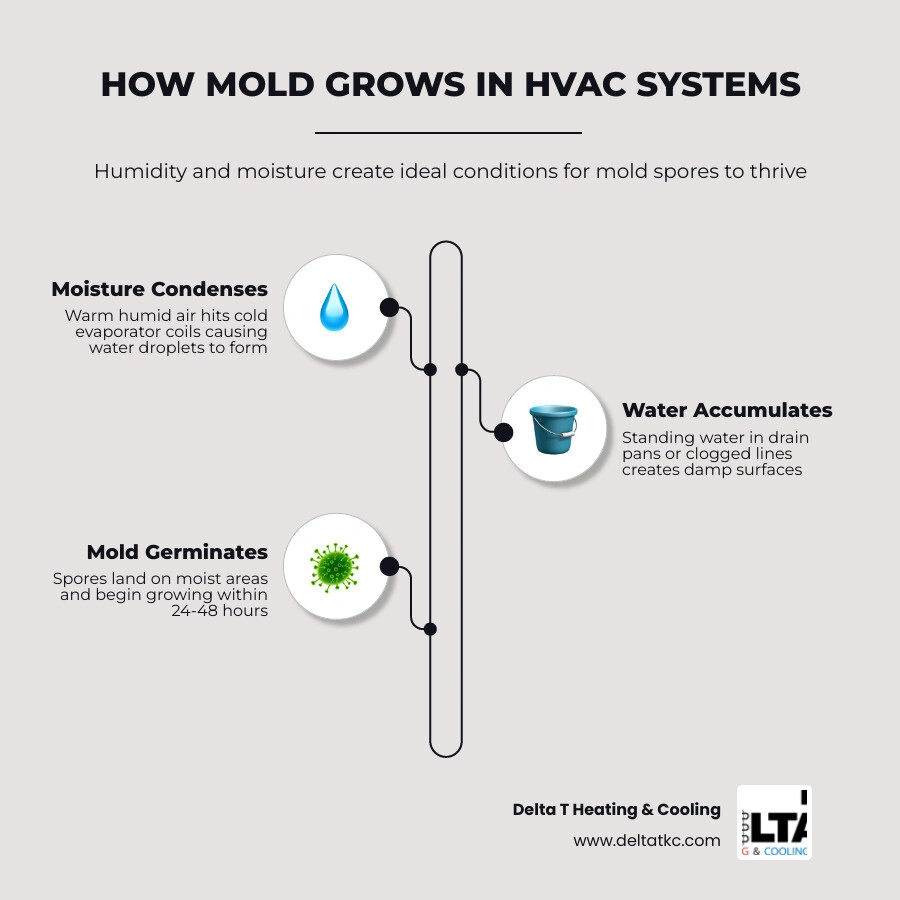
To understand how mold gets a foothold in your home, you have to understand the direct relationship between relative humidity, air temperature, and your air conditioner. Your AC is actually a giant dehumidifier. As warm, humid air from your home passes over the cold evaporator coils, moisture condenses out of the air and drips into a drain pan.
However, if your indoor relative humidity levels consistently hover above 60 percent, mold typically flourishes. In fact, air with over 70 percent humidity is a definite breeding ground for mold. When warm, humid air meets cooler surfaces inside your ductwork, it reaches its dew point—the temperature at which air can no longer hold its water vapor, forcing it to condense into liquid droplets.
This condensation acts as an open invitation for microscopic mold spores. Modern home-performance standards in 2026 place a heavy emphasis on proactive moisture control. Managing this moisture is the single most important step in protecting your household. While your air conditioner removes some moisture during its normal cooling cycle, it cannot always handle the heavy humidity loads we experience during sticky Midwestern summers. This is where integrating specialized solutions like Whole House Dehumidifiers Prevent Mold Growth becomes essential to keeping your home's air safe, comfortable, and dry.
Primary Causes of Mold Growth in Heating and Cooling Systems
Mold needs three basic ingredients to thrive: a dark environment, a food source (like dust, dead skin cells, and pet dander), and moisture. Your HVAC system naturally provides the darkness, and even the cleanest homes have microscopic dust particles passing through the air. That leaves moisture as the only variable we can actively control.
When moisture is introduced to duct surfaces, mold can begin growing within 24 to 48 hours. If you want to know how to protect your HVAC system from mold growth, you must first understand the primary mechanical failures and structural issues that introduce unwanted moisture into the system.
How Clogged Drains and Leaky Ducts Fuel Mold
Your air conditioner's condensate drain system is designed to safely channel away all the water wrung out of your indoor air. Over time, a mixture of dust, algae, and bacterial slime can build up inside the narrow condensate line. When this happens, the line clogs, causing the drain pan beneath your evaporator coil to overflow. This standing water creates a high-humidity microclimate inside your air handler—essentially a five-star resort for mold colonies.
Leaky air ducts pose a different, yet equally severe, threat. When there are gaps, cracks, or unsealed joints in your ductwork, your system can pull in hot, humid air from unconditioned spaces like attics, crawlspaces, or wall cavities. When this humid air collides with the cool metal walls of your supply ducts, rapid condensation occurs. This "sweating" dampens the surrounding insulation and the interior of the ducts, creating a perfect pathway for mold to spread. Routine maintenance is the key to catching these hidden issues before they escalate, as discussed in our guide on How Proper HVAC Maintenance Prevents Mold Growth.
The Role of System Sizing in Mold Prevention and Your HVAC System
One of the most common design flaws in residential heating and cooling is improper system sizing. Many homeowners assume that a larger air conditioner is always better because it will cool the house faster. In reality, an oversized AC unit is a primary driver of high indoor humidity.
Because an oversized system cools the home so rapidly, it experiences a phenomenon known as "short cycling." It turns on, blasts the house with cold air, and shuts off after only a few minutes. While the thermostat might show that your target temperature has been reached, the system didn't run long enough to pull moisture out of the air. A properly sized system needs longer, steady run cycles to effectively lower the relative humidity. When a system short cycles, the air remains stagnant and humid, laying the groundwork for mold to develop.
Warning Signs of Mold in Your Ductwork and Equipment
Because your HVAC system is largely hidden behind walls, in closets, or up in the attic, mold can easily grow undetected for months. However, there are several warning signs that should immediately put you on high alert:
- A Musty, Earthy Odor: If you notice a damp, stale, or "dirty sock" smell whenever your air conditioner or furnace kicks on, mold is likely growing somewhere in the airflow path.
- Visible Growth Around Vents: Take a close look at your supply registers and return grilles. If you see black, green, or brown speckles, or a dusty, fuzzy residue clinging to the slats, it is time for an inspection.
- Persistent Allergy Symptoms: Have you noticed that your family members are coughing, sneezing, or experiencing watery eyes, runny noses, and headaches primarily when they are inside the house?
- Unexplained Respiratory Issues: Mold spores circulating through the air can trigger asthma attacks and aggravate chronic respiratory conditions.
If you suspect your home's air is making you sick, it is important to evaluate your home's overall indoor air quality to pinpoint where the pollutants are coming from.
Proactive Maintenance Strategies to Keep Spores Away
Preventative maintenance is the absolute best defense against mold. By keeping your system clean, dry, and well-calibrated, you eliminate the environmental conditions that allow spores to germinate in the first place.
Investing in regular upkeep not only protects your health but also extends your system's lifespan and keeps your monthly energy bills from skyrocketing. For a complete breakdown of what goes into keeping your system in top shape, check out our Annual HVAC Maintenance Complete Guide, and learn why consistency matters in our article on AC Tune Up The Importance of Regular Maintenance.
Essential DIY Steps for Homeowners
While some HVAC tasks are best left to licensed professionals, there are several simple habits you can adopt to significantly lower your mold risk:
- Change Your Air Filters Regularly: Check your filters every 30 days. A dirty filter restricts airflow, which can cause your evaporator coils to freeze over, creating a massive amount of water when they eventually melt.
- Upgrade Your Filtration: Consider upgrading to high-efficiency filters with a MERV rating of 8 to 13. These are excellent at capturing mold spores, dust, and other tiny allergens.
- Keep Vents and Grilles Clean: Vacuum your register covers regularly to prevent dust buildup, which can act as a food source for mold.
- Flush Your Condensate Line: Pouring a cup of plain white vinegar down your condensate drain line once every few months can help keep algae and slime from forming clogs.
Professional Tune-Ups and Mold Prevention and Your HVAC System
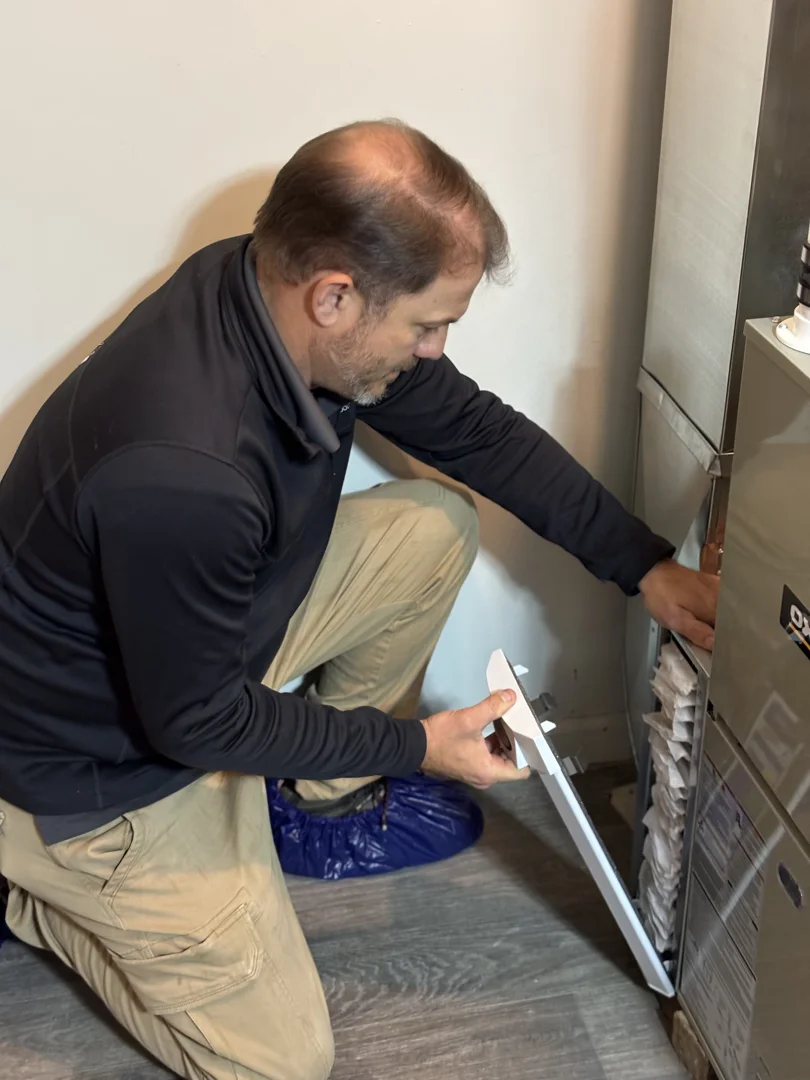
While DIY steps are incredibly helpful, they cannot replace the trained eye and specialized tools of a professional technician. During a bi-annual maintenance visit, a professional will perform deep cleaning tasks that are inaccessible to homeowners.
This includes cleaning the delicate evaporator and condenser coils, checking the drain pan for proper slope and drainage, inspecting the integrity of the ductwork for leaks, and testing the system's airflow and humidity-removal capabilities. If severe mold contamination is already present in your home's structure or major duct networks, professional remediation is necessary to safely contain and eliminate the spores without contaminating the rest of your living space.
Advanced Technologies: UV Lights and Dehumidifiers
For homes in areas prone to humid summers, standard air conditioning alone might not be enough to guarantee a mold-free environment. Fortunately, several highly effective add-on technologies can be integrated directly into your existing HVAC setup.
Two of the most popular and powerful tools are UV-C germicidal lights and whole-house dehumidifiers.
- UV-C Germicidal Lights: These lights are installed directly inside your central air handler, positioned to shine continuously on the evaporator coil. The ultraviolet light penetrates the cell walls of mold, bacteria, and viruses, destroying their DNA and rendering them unable to reproduce or survive. This keeps your coils completely free of slimy biological buildup.
- Whole-House Dehumidifiers: Unlike noisy portable units that only dry out a single room, a whole-house dehumidifier is installed in your ductwork. It monitors the humidity of the air entering the system and pulls out excess moisture before it is distributed throughout your home, keeping your entire living space within the ideal 30% to 50% relative humidity range.
| Technology | Primary Function | Installation Location | Best For |
|---|---|---|---|
| UV-C Coil Purifiers | Kills mold, bacteria, and viruses on contact by destroying their DNA. | Inside the air handler, directly facing the evaporator coil. | Preventing biological growth on wet coils and sanitizing circulating air. |
| Whole-House Dehumidifiers | Actively pulls moisture out of the air to maintain target relative humidity. | Integrated into the main ductwork system. | Homes with chronic high humidity, damp basements, or short-cycling AC units. |
Frequently Asked Questions About HVAC Mold
Navigating mold prevention can feel overwhelming. Here are answers to some of the most common questions we hear from local homeowners.
Can I use bleach to clean mold out of my air ducts?
Absolutely not. You should never use household bleach to clean mold out of your HVAC ductwork. First, bleach is highly corrosive and can permanently damage metal ducts and the delicate components of your air handler. Second, bleach is primarily made of water. When you apply it to porous materials like fiberglass duct board or flexible duct liners, the chlorine evaporates quickly, leaving behind water that penetrates deep into the material and actually feeds the mold regrowth. Finally, inhaling bleach fumes circulated through your ventilation system is highly irritating to your lungs and eyes.
How quickly can mold start growing after a water leak?
Mold is incredibly opportunistic and fast-moving. Under the right conditions—specifically warm temperatures, a food source like dust, and relative humidity above 60%—mold spores can germinate and begin growing within 24 to 48 hours of initial water exposure. Visible colonies can start forming on surfaces in as little as 3 to 7 days. This is why treating even minor leaks, damp insulation, or standing water in your drain pan as an urgent priority is critical.
Will running my HVAC fan on "Auto" help prevent mold?
Yes, keeping your thermostat's fan setting on "Auto" is much better for mold prevention than setting it to "On." When the fan is set to "On," it runs continuously, even when the outdoor compressor isn't actively cooling. This continuous airflow passes over the wet evaporator coil, re-evaporating the newly collected moisture and blowing it right back into your home's air ducts, raising your indoor humidity. Setting the fan to "Auto" ensures it only runs when the system is actively cooling and dehumidifying, allowing the collected water on the coils to drain away safely between cycles.
Keep Your Home Safe and Comfortable
Protecting your home from mold requires a proactive approach to moisture control, regular maintenance, and the right indoor air quality technology. At Delta T Heating & Cooling, we are proud to provide prompt, honest, and professional HVAC services across Johnson County and the surrounding areas—including Overland Park, Olathe, Lenexa, Shawnee, and Kansas City.
Whether you need a seasonal AC tune-up, want to clear a stubborn condensate line, or are ready to upgrade your home with a whole-house dehumidifier or UV-C coil purifier, our experienced team is here to help with clear explanations and affordable maintenance plans. Contact us today to schedule your system inspection.
Talk to us
Need Help?
Engineer-led diagnosis. Upfront pricing. Free second opinions on outside quotes.
More Articles
View All PostsReady to Get Started?
Whether you need a repair, maintenance, or a new installation, our expert team is here to help.