Plan & act

AC died in a heat wave, furnace out in a cold snap: what to do right now

First, run the two-minute safe checks: breaker, filter, thermostat batteries, and the condensate float switch. If you smell gas, leave the house and call Spire from outside. Then protect vulnerable people and pets, and call with your system's symptoms — not a self-diagnosis.

Act7 min readUpdated August 19, 2026

First, run the two-minute safe checks: breaker, filter, thermostat batteries, and the condensate float switch. If you smell gas, leave the house and call Spire from outside. Then protect vulnerable people and pets, and call with your system's symptoms — not a self-diagnosis.

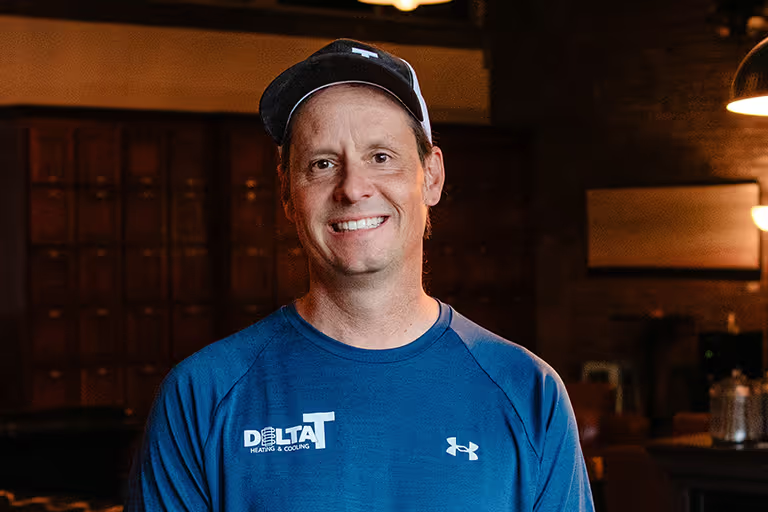
Andy Mitchell, PE, Owner & Licensed Professional Engineer

Reviewed by

Andy Mitchell, PE

Owner & Licensed Professional Engineer

The two-minute safe checks — do these before you call anyone

A surprising share of "dead system" calls across the metro end with no truck roll, because the fix is one of these:

  • Breaker. Check the panel for a tripped breaker on the furnace, air handler, or outdoor condenser. Reset it once. If it trips again, stop — that's a real fault, and repeatedly resetting it can turn a small problem into a big one.
  • Filter. A clogged filter can choke airflow enough to trip safety limits on a furnace or freeze an AC solid. If it's gray and packed, swap it.
  • Thermostat. Dead batteries and a blank screen mimic a dead system. Check batteries, mode (heat vs. cool), and setpoint — a smart thermostat mid-update or offline can also drop the call for heating or cooling.
  • Condensate float switch. A full condensate drain trips a small safety switch that shuts the system down on purpose. If the drain pan is full, that's your culprit.

If you smell gas: skip all of this. Don't flip switches, don't relight anything. Leave the house, then call Spire's emergency line and 911 from outside. Gas leaks are the one scenario where the right move is out the door first, phone second.

While you wait — protecting the people who can't tough it out

Kansas City's climate makes both failure directions genuinely dangerous. In a July heat dome, indoor temps climb fast; in a January cold snap, a house sheds heat quicker than most people expect. Whether you're in Kansas City, MO, Leavenworth, or Raytown, the priorities are the same. In heat: get elderly family members, infants, and pets to the coolest room, close blinds on the sun side, run fans and cold water, and don't hesitate to relocate to a friend's house, a library, or a cooling center — heat illness sneaks up on people who "feel fine." In cold: layer up, close off unused rooms, let faucets drip on exterior walls to protect pipes, and use space heaters only on a wall outlet with clearance — never an extension cord, never unattended. Fireplaces and ovens are not whole-house heat sources; carbon monoxide risk climbs when people improvise (our CO safety guide covers why).

Where the bad day gets worse — three panic mistakes

The failure we see most in emergencies isn't the equipment — it's decisions made at 95°F. Three patterns:

  1. Accepting a whole-system diagnosis without a named failed part. "It's shot, you need a new system" is a conclusion, not a diagnosis. Make any tech name the failed component — capacitor, blower motor, ignitor, board, compressor — and put it in writing. Some of those are inexpensive repairs.
  2. Signing a replacement contract the same hour. A dead system feels like it demands an instant decision. It almost never does; portable heat or cooling buys you a day, and a big diagnosis deserves a same-day second look before five figures leaves your account.
  3. Resetting the breaker over and over. One reset is a test. Five resets is how a tripped breaker becomes a burned compressor or a damaged board.

True emergency or next-morning call? An honest triage

Field-honest rules: it's a genuine right-now emergency if you smell gas, if a carbon monoxide alarm is sounding, if someone vulnerable is in the home during dangerous heat or cold, or if temperatures are headed below freezing and pipes are at risk. It can usually wait for a next-morning call if the house is uncomfortable but safe — say 80s inside with fans running, or 50s inside with layers and space heaters — and everyone in the house is healthy. After-hours emergency rates are real everywhere in this industry, so waiting eight hours on a non-dangerous failure often saves real money.

When you call any contractor, have this ready: what the system is doing (nothing at all, blowing wrong-temperature air, short bursts), what you already checked (breaker, filter, thermostat, float switch), the outdoor unit's brand and approximate age, and whether anyone worked on it recently. That two-minute rundown gets the right parts on the truck. Before you call, our step-by-step guides for an AC that won't cool and a furnace that won't heat walk the full checklist.

Your emergency playbook — and who to call

Tape this to the inside of a cabinet: gas smell means leave first and call Spire from outside; otherwise run the two-minute checks — breaker once, filter, thermostat, float switch; protect the vulnerable and decide honestly whether tonight is dangerous or just uncomfortable; and on any big diagnosis, get the failed part named in writing before agreeing to a replacement. A same-day second opinion on a "you need a whole new system" call is worth far more than the hour it takes.

We run AC repair and heating repair across both sides of the state line, with flat-rate pricing that doesn't change because you're desperate. If your system is down right now, call or message us — we'll tell you over the phone whether it can safely wait until morning.

Common questions

What should I check first when my AC or furnace stops working?

Four things, in order: the breaker panel for a tripped breaker (reset once, never repeatedly), the air filter (a clogged filter trips safety shutdowns), the thermostat (batteries, mode, and setpoint), and the condensate float switch (a full drain pan shuts the system off on purpose). These checks resolve a surprising share of no-heat and no-cool calls without a service visit.

What should I do if I smell gas in my house?

Leave immediately. Don't flip light switches, relight pilot lights, or use anything that can spark. Once you're outside and away from the house, call your gas utility's emergency line — Spire in the Kansas City metro — and 911. Gas leaks are the one HVAC scenario where you evacuate first and make calls second.

Is a broken AC or furnace a true emergency?

It's a true emergency if you smell gas, a carbon monoxide alarm is sounding, someone elderly, an infant, or a medically vulnerable person is in the home during dangerous heat or cold, or freezing temperatures threaten your pipes. If the house is uncomfortable but safe and everyone is healthy, a next-morning call is usually fine and avoids after-hours rates.

How do I avoid being overcharged during an HVAC emergency?

Ask the technician to name the specific failed part in writing — capacitor, blower motor, ignitor, compressor — before approving anything. A conclusion like "the whole system is shot" is not a diagnosis. On any full-replacement recommendation, get a same-day second opinion before signing; a legitimate finding will survive a second set of eyes.

Got a quote you want a real second opinion on?

Send it over — we'll review it free. No pressure, no script.

Back to the Learning Center